If you’ve been out on the Bay of Quinte this month, you already know the feeling: the water’s still inviting, the evenings are getting cooler, and it’s easy to tell yourself you’ll deal with the boat “next weekend.”
Here’s the thing, Thanksgiving is not that far out. And by then, every marina from Belleville to Trenton is juggling the same rush—boats coming out, lifts booked solid, and a forecast that can flip from mild to hard frost in a hurry.
Industry operators have been saying the same thing for a while now: haul-out season is getting compressed. Warmer Septembers, then a sudden October cold snap, leave a shorter window to get boats out of the water without stress. Waiting until the first freeze isn’t a plan—it’s a gamble with your engine block.
Why September (not “sometime in October”) matters
A marine service tech interviewed this week put it plainly: September is when many owners start thinking about their boats less—and it’s actually when they should be thinking about them more. A boat that sits unused without proper prep is asking for expensive spring surprises.
That advice came out of a southern climate story, but the physics don’t change on Lake Ontario. Water left in an engine, raw-water cooling passages, or freshwater lines expands when it freezes. On sterndrives and inboards especially, that expansion is strong enough to crack cast iron—blocks, heads, exhaust. You’re looking at a repair bill in the thousands instead of a few hundred dollars of proper winterization.
Outboards are kinder (many self-drain when the boat comes out), but they still need fuel treatment, fogging, and a fuel/water separator change if the boat is going away for the season. Skipping that “because it’s just an outboard” is how you invent spring headaches.
The short checklist that actually prevents spring pain
You don’t need a novel. You need a short list done before the first hard freeze:
1. Stabilize the fuel—don’t leave ethanol to its own devices.
If you’re not running ethanol-free fuel, a marine ethanol treatment is non-negotiable for boats that sit. Ethanol can pull water into the tank; once phase separation starts, stabilizer won’t fix it—you’re draining and discarding. Treat the fuel, circulate it through the system, and don’t leave stale gas as a spring science experiment.
2. Get the water out (and protect what you can’t drain).
For sterndrives and inboards: evacuate water from the engine and outdrive, then protect with the right antifreeze where needed. Fog the cylinders so metal isn’t sitting bare and rusty all winter. Change the fuel/water separator while you’re at it.
3. Do the annual service now, not in the April lineup.
Fall and winter are the best time for oil changes, gear lube, and anodes. Problems from this summer are still fresh in your mind, and the service bay isn’t yet buried under “everyone wants to splash tomorrow.”
4. Empty the boat like you mean it.
Food, drinks, gear, cushions (or stand them on edge), bilge and livewells dried out. Moisture and leftovers are how you get mold, mildew, and uninvited winter guests chewing on wiring. Marinas that run busy yards keep reminding owners: boats that aren’t ready for haul-out slow everyone down—and that’s how schedules slip.
5. Book the lift and the storage slot before the crush.
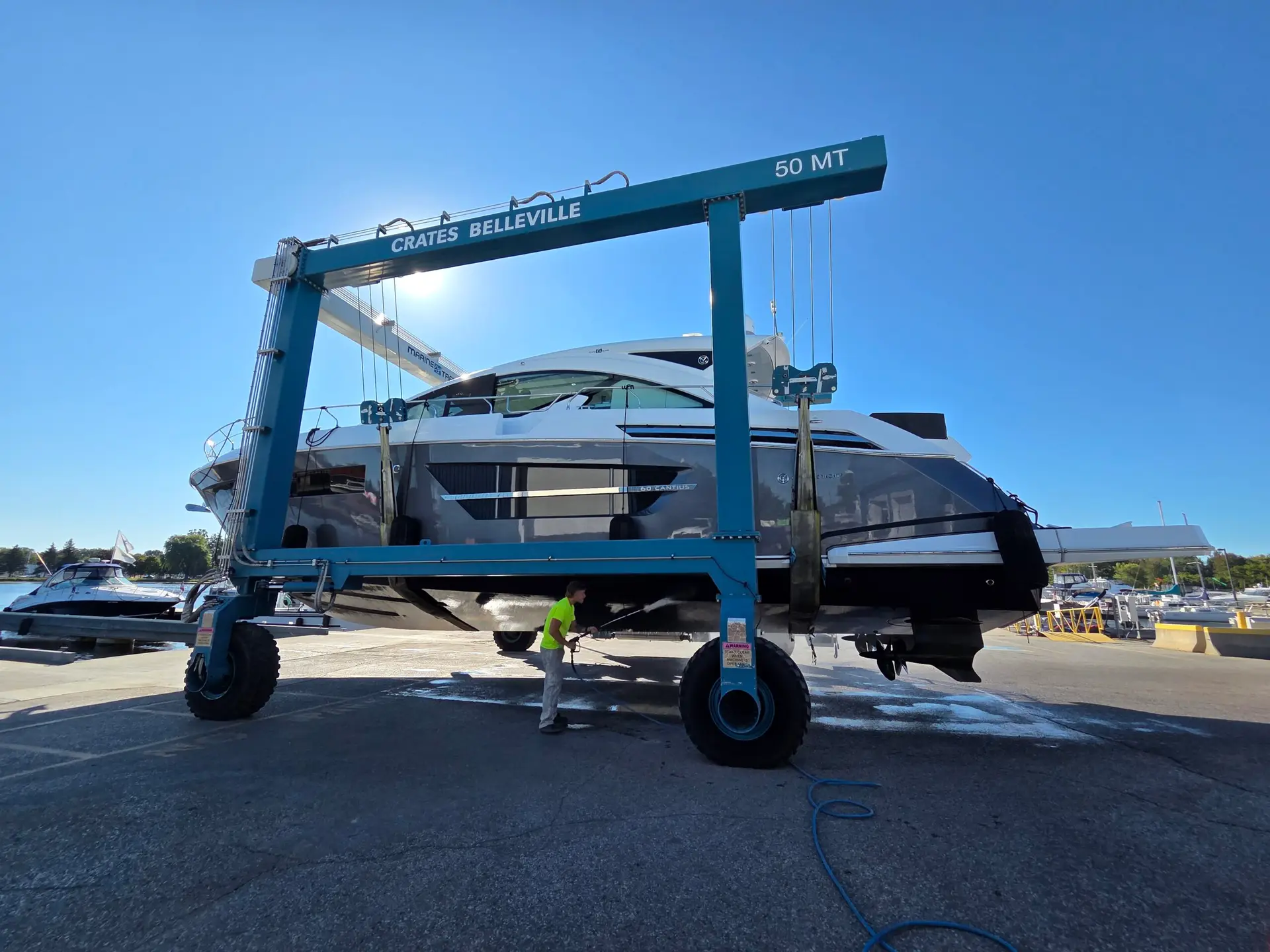
Dry storage on the hard is still the standard play for Great Lakes winters: haul, wash, block, winterize, optional shrink-wrap with proper vents so you’re not trapping a mold greenhouse. Popular yards fill launch calendars early too—so when you book fall storage, it’s smart to talk about a spring launch window at the same time.
A soft note from our yard
At Crate Marine Belleville, this stretch of the calendar is when haul-out, winterization, and storage all stack on top of each other. We’re not here to rush you off the water while the Quinte’s still treating you well—but we are here to say that a booked lift date beats a frost advisory and a full schedule.
If you’re still in the water and you’re not sure what’s left on your list, give the yard a call. We’ll help you sort DIY-friendly steps from the jobs that are safer in professional hands—especially sterndrives, closed cooling systems, and anything you don’t want to discover cracked in May.
One more practical tip from the industry side: after the boat is out and blocked, snap a few clear photos of the hull, deck, and cabin. If winter weather or yard mishaps ever become an insurance conversation, dated photos beat memory every time.
Enjoy the last good weekends. Just don’t leave the boat’s winter to chance.